
Kick the can rules: how to play, the arguments to settle first, and a version for grown-ups
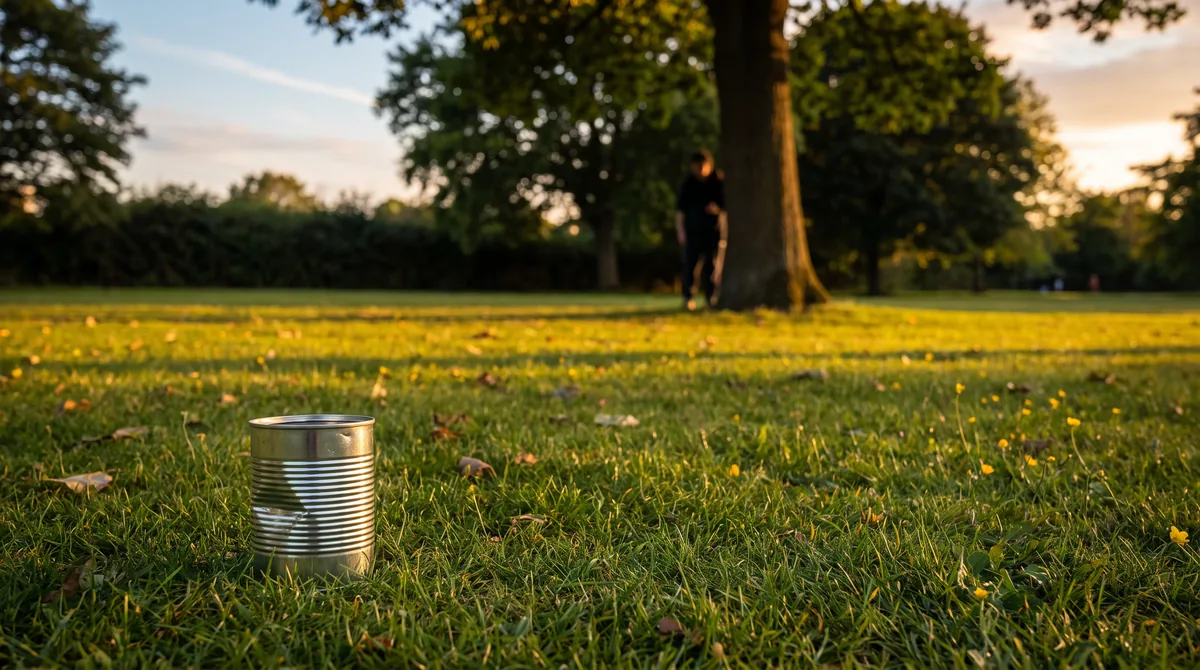
Kick the can is hide and seek with a jailbreak. One player is "it" and guards an empty can in an open space. "It" counts while everyone else hides, then hunts for them. Anyone caught goes to jail, near the can. Any hider who is still free can sneak in and kick the can: if they do it without being caught, everyone in jail goes free, and "it" has to put the can back before hunting again. "It" wins the round by catching everybody.
That's the whole game. Below: the rules step by step, setup, the house rules to settle first, a park version for adults, and safety with kids.
Kick the can rules, step by step
Every version agrees on the core. This is the classic game as Wikipedia and The Game Gal describe it.
- Put the can in the middle. An empty can (or a bucket, cone or plastic bottle) goes in an open spot everyone can find. Next to it is the jail, where caught players wait.
- Pick "it." Volunteer, draw straws, or whoever lost last time.
- "It" counts at the can. Eyes covered, out loud. The Game Gal gives 30 as an example and says the number depends on the players' ages and the size of the area.
- Everyone else hides. Inside the boundaries you agreed on.
- "It" hunts. When "it" finds a hider, they catch them (by tagging, or by calling their name; see the house rules below), and the caught player goes to jail.
- Free hiders try to kick the can. A hider who reaches the can without being caught kicks it over and yells "Kick the can!" loud enough for "it" to hear. Everyone in jail is free and runs off to hide again.
- "It" resets the can. "It" has to put the can back in its spot before catching anyone else. Some groups make "it" count again, The Game Gal suggests to about 10, to give the freed players time to hide.
- The round ends when "it" has caught everyone. Wikipedia says the next "it" is usually the player who has been in jail longest. Playworks also ends the round when time is up, then a new finder volunteers.
What you need to set up
| What | What works |
|---|---|
| Players | 6 or more. Playworks lists 11 or more; The Game Gal recommends "at least 12." |
| The can | An empty can, a bucket, a cone, or a plastic bottle or jug. Something that makes a noise when it falls is best. |
| The jail | Right next to the can, or in view of it. A flat, open patch of ground. |
| The area | A lawn, a backyard or a section of a park with trees, bushes and walls to hide behind. |
| Time | Playworks plans 10–15 minutes for a game with kids. With adults at dusk, set a round limit (see below). |
Pick a spot for the can that's open enough for kickers to have a chance. If the can sits in a corner, "it" can guard it without moving and the game stalls.
Metal or plastic? A metal can makes the best noise, but The Game Gal warns players to be careful not to cut themselves. With kids, or with anyone likely to kick hard, use a plastic bottle, a jug or a bucket, and check the edges of any can before you start.
House rules people argue about
Kick the can has been played on streets and in backyards since at least the 1930s (Wikipedia says it was popular during the Great Depression because it needed no playing field, just a discarded can), so every neighborhood has its own rules. Settle these before the first count.
| Argument | Options (pick one) |
|---|---|
| How does "it" catch someone? | A touch tag, as The Game Gal plays it. Or a call-out: "it" shouts the hider's name and where they are. Playworks plays it with no tagging: "it" calls the name and both race back to the can, and whoever kicks it first wins (the hider is safe, or caught). |
| Can "it" guard the can? | The big one. Common rule: no standing next to the can while hiders are still free, or "it" has to stay a set number of steps away unless they're chasing someone. Without a rule like this, nobody ever gets freed. |
| Can a kicker be seen? | Yes. The Game Gal allows kicking in plain view of "it," as long as "it" doesn't tag the kicker first. |
| Does one kick free everyone? | Usually yes. Wikipedia notes a version where each kick frees one prisoner, in the order they were caught. |
| Can you move or hide the can? | No. The Game Gal calls carrying or hiding the can cheating. |
| Can jailed players move? | They stay in jail until freed, at or near the can. |
| Who is "it" next? | The player jailed longest (Wikipedia), the first one caught, or a volunteer (Playworks). |
Two seekers. With a big group, one "it" can't watch the can and hunt at the same time. Playworks says large games can have more than one finder, and The Game Gal usually plays with two.
Kick the can for adults: a park at dusk
Kick the can works just as well for grown-ups (they run faster and argue louder). A few changes help.
- Pick a public park with open lawn and lots of cover, and agree on clear boundaries: "between the path, the fence and the big trees." Stay off sports fields in use, playgrounds full of kids and anywhere people are trying to picnic.
- Use a plastic bottle or a bucket, not a glass bottle, and nothing that can fly into someone.
- Play at dusk, not in the dark. Dusk makes hiding easier and kicking more dramatic. Stop when you can't see the ground anymore. Everyone brings a phone with a flashlight, used only to walk back.
- Count higher. Count to 60 or 100 for a big park.
- Set a round limit, like 15 minutes. If "it" hasn't caught everyone by then, the hiders win and someone new is "it."
Check the park's posted rules and closing time, and if anyone asks what you're doing, tell them. Our list of outdoor games for adults has more games that work in a park, and the best hiding spots guide covers what makes a spot good outdoors.
Safety rules for kick the can with kids
Kick the can is a running game in an open space, so the rules are about where you play and where you hide.
- Play in an open, fenced or quiet space, away from roads. No hiding behind or between parked cars, in driveways, or anywhere a driver might not see a kid running out.
- Nowhere wet or high. No pools, ponds, roofs or trees above climbing height.
- Public places or your own yard only. Never in someone else's yard, shed or garden, and never near anyone's home.
- Nothing that latches. No hiding in car trunks, coolers, chests or old fridges. The U.S. Consumer Product Safety Commission warns that "children playing 'hide-and-seek' have found the non-working freezers a deadly place to hide" (CPSC).
- A safe can. A plastic bottle or a bucket for young kids, and no kicking the can toward other players.
- An adult around, who knows the boundaries and can call everyone in.
- Count heads at the end of every round, and especially before going home.
Kick the can and the other hide and seek games
Kick the can is one of the variants in our hide and seek rules guide. It's the one with the most running and the longest rounds. If your group wants something quieter, try sardines, where one person hides and everyone else squeezes into the spot as they find it.
All of these need everyone in the same place. When your group is spread across different cities, you can still play hide and seek on a real map: in Planque, the hider drops a secret pin and the others spend a few questions (radar, hot or cold, same district?, nearest metro) to narrow it down, then tap where they think the hider is. Everyone takes their turn whenever they have a minute.
FAQ
How many people do you need for kick the can?
At least six or so to make it fun. It's better with a bigger group: Playworks lists 11 or more players, and The Game Gal recommends at least 12 and usually plays with two players as "it."
Do you have to tag people in kick the can?
It depends on your house rules. Some groups play with a touch tag. Others play with a call-out, where "it" names the hider, and in the Playworks version both then race back to the can.
How do you win kick the can?
"It" wins a round by catching every hider. The hiders "win" by staying free and kicking the can to set everyone else loose, so the round keeps going.